- #1
Thread Owner
Why would you not change the filter if you saw particles in the oil. later RJDMine, when new, was about 3/4 up. Just changed oil, not filter, put in 7qts and it’s same as yours. Think of that as dip stick showing up at “full”. I’ll probably do 7qts again with new filter and it’ll be a little below that. Manual says capacity is 7.5 qts
Cuz that’s what a filter is for and only 500 miles + location and not having appropriate filter wrench to get it off with factory 200’ lbs torque on there. I’m gonna change it again in about 2500 miles- waaaaay less than most who will wait for their free oil change at 7000+. I mean 3,000 miles is no where near excessive for a filterWhy would you not change the filter if you saw particles in the oil. later RJD
To certain extent leaving the filter in with trapped debris would increase efficiency for a short period of time but quickly harms the over all system. So I don't see him mentioning changing oil filter to frequently. However to each his own as mentioned I will change oil and filter at 5000 miles. Later RJDSmoov is correct, it's bad to change any kind of filter too frequently. The debris in a filter helps to improve its efficiency.
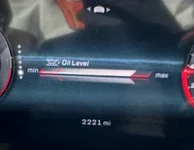
Also as for the original question on this thread: think of the digital oil meter like a dipstick. Essentially you're only seeing the top of the reserve on the meter. As long as it is above the red line, you have enough oil to function, but it's best to keep it around where you have it so you have wiggle room.
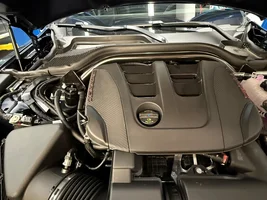
Have you read your manual yet? That is normal. Plus, we've discussed this previously and one guy even over-filled his!Is this normal for the oil level? I suppose "max" is not the same as "full"? These cars don't have a dipstick ....so. Just wondering if everyone else has the same level.
So, you're saying a dirty filter is better than a clean one? Please post a link. I have never seen that before.Smoov is correct, it's bad to change any kind of filter too frequently. The debris in a filter helps to improve its efficiency.
Also as for the original question on this thread: think of the digital oil meter like a dipstick. Essentially you're only seeing the top of the reserve on the meter. As long as it is above the red line, you have enough oil to function, but it's best to keep it around where you have it so you have wiggle room.
I posted the Oil Geek (certified lubrication engineer) with this analysis in my post aboveSo, you're saying a dirty filter is better than a clean one? Please post a link. I have never seen that before.
It looked to me like they were talking about gas though.I posted the Oil Geek (certified lubrication engineer) with this analysis in my post above
There are a lot of videos discussing this for all kinds of filters, but also it's just physics. If the filter has particles in it, those particles are going to block even more particles until eventually the filter becomes fully clogged, so a new filter is letting more small particles through.So, you're saying a dirty filter is better than a clean one? Please post a link. I have never seen that before.
I thought that was only on an air filter with an oiled element. I've always only thought this.There are a lot of videos discussing this for all kinds of filters, but also it's just physics. If the filter has particles in it, those particles are going to block even more particles until eventually the filter becomes fully clogged, so a new filter is letting more small particles through.
How often you change depends on your use case. Air intake on a race car? Change it constantly for more air flow and higher risk of damage. Oil filter on commuter car? Change it as recommended, but not any sooner